Skillet & Stove

How to Tell If Cast Iron Is Seasoned

There is no gauge for seasoning, so people guess. Four checks settle it in about two minutes — and the most reliable one costs an egg.

By Stephen V.Last updated How we pick

How this is funded: we earn a commission if you buy through our links, at no extra cost to you. It never changes which pan we recommend, and we’ll happily tell you to keep the skillet you already own. Full disclosure.

The short version: a seasoned pan is evenly dark, has a satin sheen rather than a sticky shine, sheds water in beads, and fries an egg with a little fat in it. If yours does those four things, stop reading and go cook — it is seasoned, and nothing on the internet will improve it faster than using it will.

The reason this question comes up so often is that seasoning is invisible as a quantity. It is not a coating you can measure the thickness of; it is oil that has polymerized — cross-linked into a hard, plastic-like layer chemically bonded to the iron, as the American Chemical Society describes it — and it builds up a molecule at a time with every fatty thing you cook. Lodge’s own definition is the plainest one published: “Seasoning is just the term we use to describe the oil baked onto the cast iron pan. It forms a natural, easy-release cooking surface and helps prevent rust.”

So there is no gauge. There are four observations, and they get progressively more useful.

Check 1: colour

Look at the cooking surface in daylight. A seasoned pan is dark — brown-black to black — and reasonably even. What you are looking for is the absence of grey: bare cast iron is a dull silver-grey, and any patch of that colour is iron with nothing on it. The classic pattern is a dark ring around the outside and a grey centre, because the centre is where the food and the spatula are.

Lodge notes that the black patina is “a carbon deposit left by the oil on the skillet” rather than paint or a chemical coating, which is why it is both self-renewing and locally removable. Blotchiness on a young pan is normal and evens out. Blotchiness that is grey rather than brown is the thing to act on.

Check 2: sheen, and specifically the wrong kind

A well-seasoned pan has a low satin or semi-gloss sheen, dry to the touch. Two failure modes look superficially similar and mean opposite things.

Dull and chalkymeans thin seasoning — the surface is oxidising rather than sealed. Tacky or stickymeans too much oil cured at too low a temperature, so it never polymerized and is still, in effect, oil. That is the single most common home-seasoning mistake and it is fixed by heat rather than by more oil — why is my cast iron sticky walks through it. Seasoning only forms abovethe oil’s smoke point, which is why Lodge’s own re-seasoning instruction is 450 to 500°F and not 300°F.

Check 3: the water bead test

On a cold, clean, completely dry pan, flick three or four drops of water onto the cooking surface. On a well-seasoned pan they sit up in beads and roll when you tip it. On bare or thinly seasoned iron they flatten out, spread, and darken the metal where they sit — and if you leave them there for ten minutes they will start a rust spot, which is itself the answer.

Dry the pan afterwards either way. This test is quick and directional rather than precise: it tells you the surface is hydrophobic, which is a good proxy for polymerized oil being present, but it does not tell you how much.

Check 4: the egg test, which is the real one

The only thing seasoning is foris release, so test release. Preheat the pan properly — Lodge’s figure is three to five minutes on medium-low, and a cold pan invalidates this test completely — add a teaspoon of oil or butter, and fry an egg.

  • Slides when you shake the pan: well seasoned. You are done.
  • Releases to a gentle push with a thin spatula: normally seasoned, which is where most pans in daily use live. Nothing to do.
  • Welds itself to the surface:either the pan is under-seasoned or it was not hot enough. Run it again, properly preheated, before you blame the seasoning — sticking is a preheating problem far more often than a seasoning problem, which is the whole argument of why eggs stick to cast iron and how to preheat a cast iron skillet.
If the checks say re-season it

Ranked on published specs, build and buyer fit. Select a row to jump to the full write-up. We haven’t cooked in all of these — here is exactly what we do instead.

#ProductBest forPrice
1
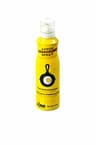
Lodge Cast Iron Seasoning Spray (8 oz)

Lodge Cast Iron Seasoning Spray (8 oz)

Canola oil in a pump bottle from the company that made most of the cast iron in America, and the most useful branded product here for one specific reason: a spray lays down a thinner film than a hand and a paper towel do. Too much oil is the single most common seasoning mistake, and this is the only thing on the page that makes that mistake harder to make.

Easiest to apply thinly
$9.93 · View on Amazon

Price as of October 17, 2026. #ad How we’re funded

2
Crisbee Cream Iron Cast Iron Seasoning (6 oz)

Crisbee Cream Iron Cast Iron Seasoning (6 oz)

An oil-and-beeswax cream rather than a liquid, and the wax is the reason to consider it. Beeswax is solid at room temperature, so the film stays where you put it on a vertical wall or an upturned pan instead of running down to pool in a corner — which is the practical failure mode of wiping a thin oil over a whole skillet. Crisbee also publishes what is in it, which several of its competitors do not.

Best for a tired pan
$14.95 · View on Amazon

Price as of October 17, 2026. #ad How we’re funded

3
La Tourangelle Expeller-Pressed Grapeseed Oil (16.9 fl oz)

La Tourangelle Expeller-Pressed Grapeseed Oil (16.9 fl oz)

Plain grapeseed oil in a tin, and the honest answer for most people. This is the oil Stargazer names in its own care guide and the one Smithey pre-seasons its pans with at the factory — so buying a bottle of it is buying exactly what the premium makers use, with no branding markup and nothing else in it. On published price per ounce it is far and away the cheapest thing here.

Best value
$6.80 · View on Amazon

$7.5810% off

Price as of October 17, 2026. #ad How we’re funded

The picks in full

#1Easiest to apply thinly

Lodge Cast Iron Seasoning Spray (8 oz)

Canola oil in a pump bottle from the company that made most of the cast iron in America, and the most useful branded product here for one specific reason: a spray lays down a thinner film than a hand and a paper towel do. Too much oil is the single most common seasoning mistake, and this is the only thing on the page that makes that mistake harder to make.

Strengths

  • Lodge states 100% canola oil with no additives and no propellants
  • A pump spray lays down a thinner film than wiping it on by hand
  • Made in the USA by the maker of the pan most readers already own

Trade-offs

  • Canola oil in a bottle costs a fraction of this per fluid ounce
  • 8 fl oz at spray-bottle pricing is not a value buy
  • Still needs wiping back after spraying — the spray is not the whole job
FormSeasoning oil
Size8 fl oz
What's in it100% canola oil, no additives or propellants
Made inUSA

Spec note. Listing publishes part number A-SPRAY, an 8 fl oz size and 100% canola oil with 'no additives or propellants'. Lodge's own listed method is the same three steps as its care guide: hand wash with a little soap, dry promptly and thoroughly, then rub a light layer on and wipe the surface until no oil residue remains — worth quoting because that last clause is the step people skip. Lodge states its products are made in the USA and are PFOA- and PTFE-free.

Specs read from the manufacturer and product listing, on September 3, 2026. “Not published” means the maker doesn’t state that figure.

#2Best for a tired pan

Crisbee Cream Iron Cast Iron Seasoning (6 oz)

An oil-and-beeswax cream rather than a liquid, and the wax is the reason to consider it. Beeswax is solid at room temperature, so the film stays where you put it on a vertical wall or an upturned pan instead of running down to pool in a corner — which is the practical failure mode of wiping a thin oil over a whole skillet. Crisbee also publishes what is in it, which several of its competitors do not.

Strengths

  • Published ingredients: non-GMO sunflower oil and beeswax
  • Solid at room temperature, so it doesn't run or pool on the sides
  • Family-made in the USA, in a 6 fl oz tub that lasts

Trade-offs

  • Several times the price per fluid ounce of a bottle of plain oil
  • Wax makes a pan look finished before the seasoning is actually hard
  • Sunflower rather than the grapeseed the premium makers specify
FormSeasoning wax
Size6 fl oz
What's in itNon-GMO sunflower oil and beeswax
Made inUSA

Spec note. Listing publishes a 6 fl oz size and states the ingredients as 'Non-GMO Sunflower Oil and beeswax', family owned and made in the USA. Crisbee's other format, the 2.3 oz Crisbee Stik, publishes a DIFFERENT blend on its own listing — grapeseed oil and beeswax — so the two are not interchangeable if the oil is what you are choosing on. Neither listing publishes a smoke point.

Specs read from the manufacturer and product listing, on September 3, 2026. “Not published” means the maker doesn’t state that figure.

#3Best value

La Tourangelle Expeller-Pressed Grapeseed Oil (16.9 fl oz)

Plain grapeseed oil in a tin, and the honest answer for most people. This is the oil Stargazer names in its own care guide and the one Smithey pre-seasons its pans with at the factory — so buying a bottle of it is buying exactly what the premium makers use, with no branding markup and nothing else in it. On published price per ounce it is far and away the cheapest thing here.

Strengths

  • The oil Stargazer's and Smithey's own published methods name
  • Cheapest per fluid ounce of anything here by a wide margin
  • One ingredient — nothing to react to and nothing to explain

Trade-offs

  • You are wiping oil on by hand; there is no applicator
  • 16.9 fl oz is far more than a seasoning routine will ever use
  • No smoke point published on the listing
FormSeasoning oil
Size16.9 fl oz
What's in itGrapeseed oil, expeller-pressed — one ingredient
Made inNot published

Spec note. Listing publishes a 16.9 fl oz size, model 40-05-GSO-A512-CS, and describes the oil as expeller-pressed and sustainably produced. It is sold as a COOKING oil, not a cast iron product — which is the point of including it, since the makers who charge the most for their pans specify this same oil for seasoning them. No smoke point and no country of manufacture is published on the listing, so both read 'Not published'.

Specs read from the manufacturer and product listing, on September 3, 2026. “Not published” means the maker doesn’t state that figure.

The three signs that say re-season now

  • Bare grey or silver metal over an area bigger than a coin, usually after a long acidic cook, a scorching, or a scouring. That iron is unprotected and will rust.
  • Orange bloom.Any rust at all means the surface is open to water. Take the rust off first — how to remove rust from cast iron — and then season, in that order.
  • Everything sticks, including fatty food. If bacon sticks, the problem is the surface rather than your technique.

None of those is an emergency and none of them ruins a pan. Lodge is blunt about it: a rusted pan is not ruined, “simply scrub the area with steel wool” and re-season. Iron is the most repairable cooking surface there is, which is the whole argument for owning it.

What a new pan should look like

Pre-seasoned pans do not arrive looking like a fifty-year-old pan, and they are not supposed to. A new Lodge is dark brown-black, slightly matte, with the casting texture clearly visible — one baked layer of oil does not fill a pebbled surface. Lodge’s premium Blacklock line gets three layers instead, which the company says makes the result “similar to a well-loved, well-used cast iron pan the first time you use it”: slicker on day one, same pan by month six. The comparison is in Lodge Blacklock vs Classic.

The machined pans look different again. Stargazer, Field, Lancaster and Backcountry Iron mill the cooking surface flat before seasoning it, so a new pan reads as smooth dark metal rather than textured black. A Stargazer arrives either seasoned “with our signature blend of canola, grapeseed, and sunflower oils for immediate use” or deliberately bare, at the same price — and a bare one fails every check on this page on purpose. Those pans are ranked in best smooth cast iron skillets.

And if a new pan is still in its wrapper, the honest answer to “is it seasoned?” is on the box. Every maker we rank states it, and we record it on every product card as a published spec rather than an impression.

Frequently asked questions

What does a well-seasoned cast iron pan look like?

Evenly dark brown to black, with a satin or semi-gloss sheen rather than a wet shine, and no dull grey patches. The colour should be uniform across the cooking surface — blotchy darkness is normal on a pan that is still building up, and it evens out with use rather than needing intervention.

How do I test if my cast iron is seasoned?

Run four checks: look at the colour (dark and even, not grey), look at the sheen (satin, not sticky), flick a few drops of water onto the dry cold surface (they should bead and roll rather than spread and darken the iron), and fry an egg in a little fat in a properly preheated pan. The egg is the only test that measures what you actually care about.

Does a new Lodge pan need seasoning?

No. Lodge has seasoned its pans in the foundry since 2002 — its own description is "We spray a thin layer of vegetable oil onto the surface and bake it at a high temperature in a large oven to season the cookware before it leaves the foundry" — and the Blacklock line gets three baked layers rather than one. A new pan is ready to cook on; what it needs is use.

Why is my cast iron grey or dull in patches?

That is thin or missing seasoning showing the iron underneath, usually in the centre where you cook most, or in a ring where an acidic sauce sat. It is not damage. Cook something fatty in the pan a few times, or do one deliberate re-season cycle, and it closes up.

Is sticky cast iron seasoned?

No — sticky is the signature of seasoning that never finished. It means oil was applied too thickly or cured below the temperature at which it polymerizes, so it is still oil rather than a hard layer. The fix is not more oil. We cover it in detail in why is my cast iron sticky.

How many times should I season a new pan?

None, if it arrived pre-seasoned, and then as often as the checks on this page say. If you are seasoning a bare or stripped pan from scratch, several thin coats beat one thick one: Lodge's own re-seasoning figure is a thin coat of oil baked at 450–500°F for an hour, repeated as needed.

Can seasoning be too thick?

Yes. Over-thick seasoning flakes off in black specks, usually onto your food, because the upper layers never bonded properly to the ones underneath. If your pan is shedding black flecks rather than looking thin, that is the problem — our page on black residue separates flaking from carbon buildup.

Sources

  • Lodge Cast Iron — How to Season Cast Iron — Lodge's foundry seasoning method; seasoning is oil baked onto the pan through polymerization; re-season at 450–500°F (accessed July 20, 2026)
  • Lodge Cast Iron — 10 Myths About Cast Iron Cookware, Busted! — Lodge's own myth-by-myth position. On soap: "Myth: You can't use soap to clean cast iron cookware. Fact: Soap isn't necessary, but you can use mild dish soap to clean cast iron. The seasoning on Lodge cast iron is fairly resilient and can withstand a little bit of soap, water, and a good scrub with a brush." On utensils: "Cast iron is the most durable metal you'll ever cook with. That means any utensil is welcome - silicone, wooden, and even metal." On glass tops: Lodge "is safe for use on various heat sources, including glass-top stoves. Simply handle with care on the stovetop - do not slide, and always remove from the stovetop after cooking." On factory seasoning: "We spray a thin layer of vegetable oil onto the surface and bake it at a high temperature in a large oven to season the cookware before it leaves the foundry." On acid: "These foods, in small quantities, are just fine to cook in brand new cookware. But large amounts of very acidic or alkaline foods can break down the seasoning when cooked for extended periods of time." On durability: "cast iron will break before it bends and should still be treated with care like any other piece of cookware." On the finish: "Lodge seasoning is 100% natural. The oil is baked on during the manufacturing process, and the black patina that remains is a carbon deposit left by the oil on the skillet." On induction: any heat source "indoors or outside, except the microwave", with a bridge element wanted for double-burner pieces (accessed October 17, 2026)
  • Lodge Cast Iron — How to Clean — Lodge's own three-step instruction for cleaning seasoned cast iron, printed as numbered steps on the maker's cleaning page. Step 1, Wash: "Start with warm, soapy water and scrub with a stiff-bristled brush or scrubbing pad." Step 2, Dry: "Dry completely with a paper towel or lint-free cloth." Step 3, Oil: "Add a thin layer of oil, using a paper towel to distribute it over the entire surface." Soapy water is step one of three on the manufacturer's own page (accessed October 17, 2026)
  • Lodge Cast Iron — Meet Blacklock, Lodge's Premium Line of Cast Iron Cookware (July 11, 2019) — Lodge's own launch announcement for Blacklock, dated July 11, 2019, and the only place Lodge publishes what the line changes against its classics. On weight: "we poured our proprietary recipe of iron as thin as we could and tested below established limits to determine the exact measurement for optimum weight without sacrificing any of the quality or durability" and "Blacklock has a weight reduction of up to 25%". On seasoning: "With Blacklock, we've baked three layers of seasoning onto each piece so the cookware arrives naturally nonstick" and "The result is similar to a well-loved, well-used cast iron pan the first time you use it"; against the classics, "With classic cast iron pans, some foods may strip the seasoning on the first few uses. With triple seasoned iron, your cookware is far more resilient." On the handle: it has "a cool-V cutout in the center of the handle, which reduces the amount of iron in the handle to allow air to flow and keep it cooler longer", with Lodge's own caveat in parentheses - "(Note: It is still made of iron, so prolonged use on a hot surface-or in the oven-will eventually heat up the handle.)" Also "spatula-friendly sloped walls", and the historical note that "In 2002, Lodge was the first to introduce foundry-seasoned cast iron to the market" (accessed October 17, 2026)
  • America's Test Kitchen — The Science of Seasoning — How seasoning forms — oil polymerizing into a hard, plastic-like layer — and how too much heat depolymerizes it (accessed July 20, 2026)
  • C&EN (American Chemical Society) — The chemistry of cast-iron cookware — ACS explainer on seasoning as polymerized oil bonded to the iron surface (accessed July 20, 2026)
  • Stargazer Cast Iron — Use & Care — Stargazer's own maintenance routine: a thin oil coat over low heat after washing, periodic deep seasoning from a 225°F oven, and a high-smoke-point oil such as grapeseed or sunflower (accessed August 11, 2026)
  • Lancaster Cast Iron — First Time Use & Care Guide — Lancaster's own break-in advice: use extra oil for the first dozen cooks, avoid acidic ingredients until the seasoning is developed, dry on low heat and oil while warm (accessed August 11, 2026)
  • University of Illinois Extension — Are you using the right oil for the right job? — Smoke point is the temperature at which a fat begins to smoke; most cooking oils smoke between about 350°F and 450°F, and high-heat work wants oils rated 400°F or above (accessed August 11, 2026)

Keep reading