Which piece should you buy first?
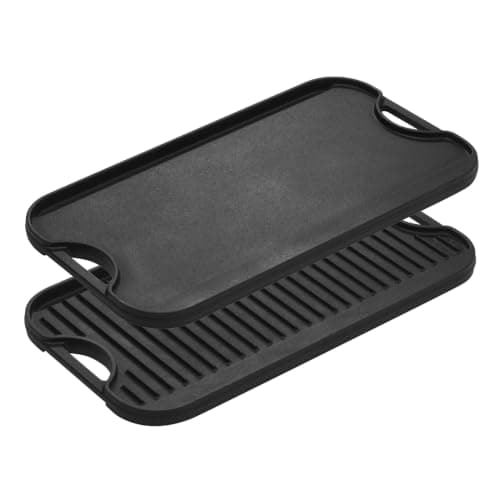
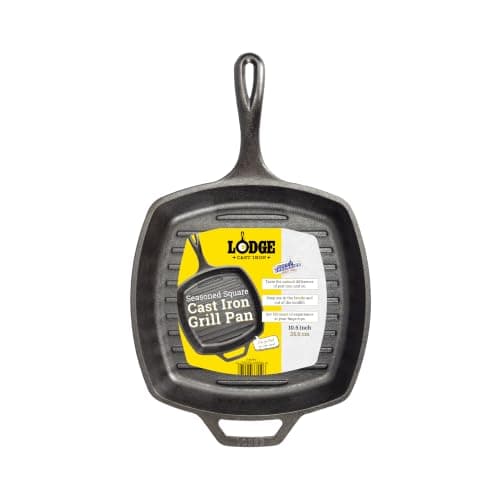
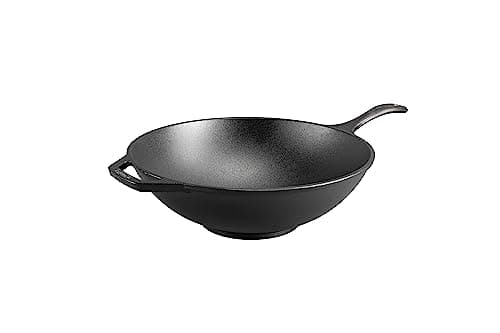
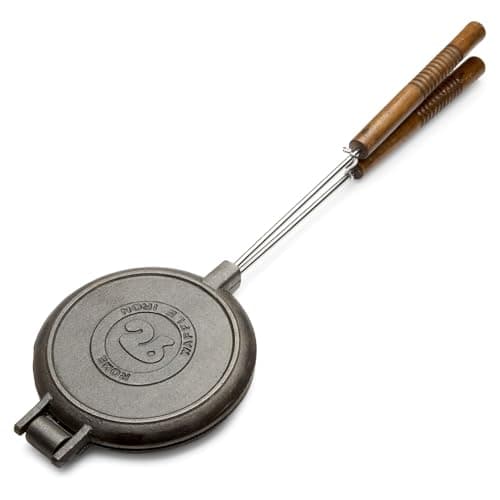
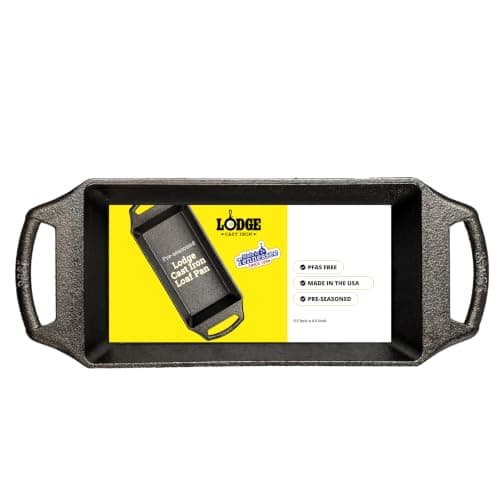
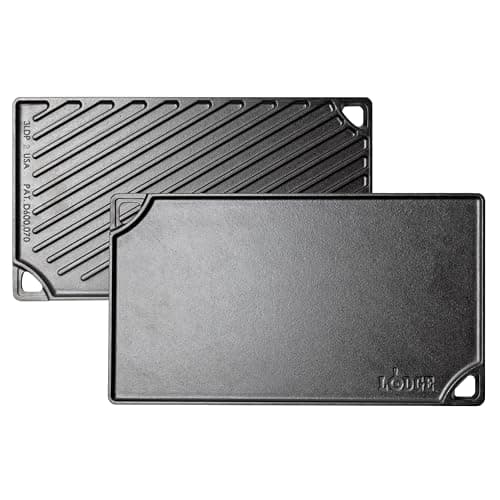
Assuming you already own a skillet, the order that makes people happiest is almost always the same. Buy the griddle first: it’s the piece that changes a routine meal, because a two-burner slab turns breakfast from three batches into one. Buy the loaf pan second if you bake at all — it’s under $25 and it visibly improves the crust on anything you put in it. The grill pan is third, and only if you specifically want the marks and the fat drainage — our grill pan vs griddle comparison settles that one on published weights and what each surface does to food. If the reason you want a flat plate is burgers rather than breakfast, the equipment answer is narrower than this page — we rank it in best cast iron for smash burgers, where ridges are a liability rather than a choice. The wok and the waffle iron are last, because both are specialists that earn their storage space only if you already know you want them.
The weight question, again
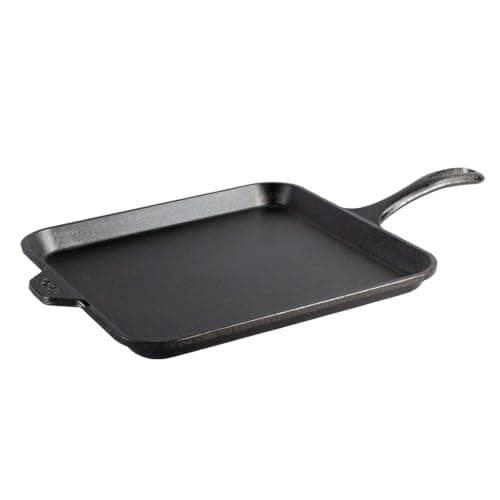
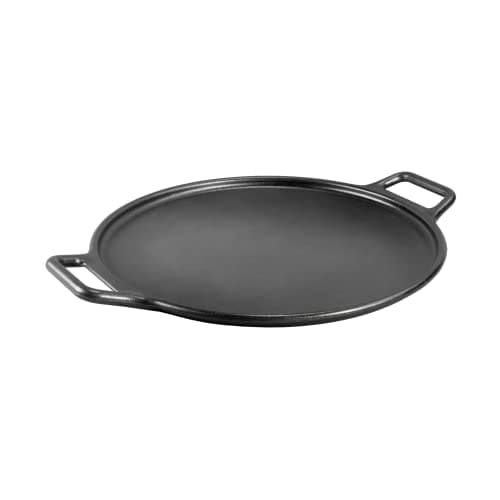
Every piece here is heavier than the aluminum or steel version of the same tool, and that weight is the whole reason it works — more iron means more stored heat, which means the surface temperature barely dips when cold food hits it. But it’s also the reason cast iron ends up at the back of a cupboard. The Pro-Grid griddle is 13.5 lb; the 14-inch wok is 12.8 lb; the round griddle is 4.5 lb. Before you buy, picture yourself washing the thing at 9pm, because that is the moment that decides whether a piece gets used. When two options do a similar job, we’ve consistently pointed at the lighter one.
Bare or enameled?
Nearly everything on this page is bare iron, and that’s deliberate. Griddles, grill pans and woks all live at high heat, which is where enamel is least useful and most vulnerable. The one place enamel genuinely helps is a grill pan, because ridged valleys are the single hardest place on earth to maintain seasoning — hence the Le Creuset option on our grill pan roundup. If you’re still weighing the two finishes in general, our enameled vs bare comparison lays out the whole trade.
What we didn’t include
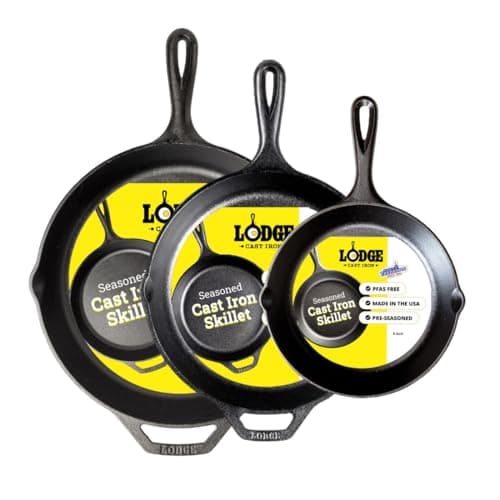
No cast iron cookware sets. Sets are how brands move slow-selling sizes, and the pieces you’d actually use usually cost less bought individually — typically a 10.25-inch skillet and one griddle. If you do need several pieces at once, our cast iron cookware set roundup names the boxes that pass that test and the arithmetic that separates them from the rest. No decorative pieces, no novelty shapes, and nothing we couldn’t confirm was currently purchasable when this page was written. Where a maker doesn’t publish a weight, a warranty or a country of manufacture, the spec table says so rather than filling the gap with a plausible number.
If you are still deciding whether you need any of this instead of the pan you already own, cast iron skillet vs griddle is the place to start. Lodge says in its own griddle primer that the main difference between the two is the height of the sides, and that one difference decides six separate cooking jobs — including the one where a flat plate beats a skillet outright and the several where it cannot compete at all.