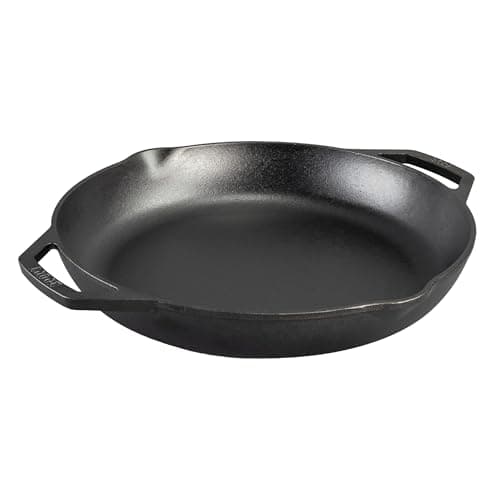
How to choose a cast iron skillet
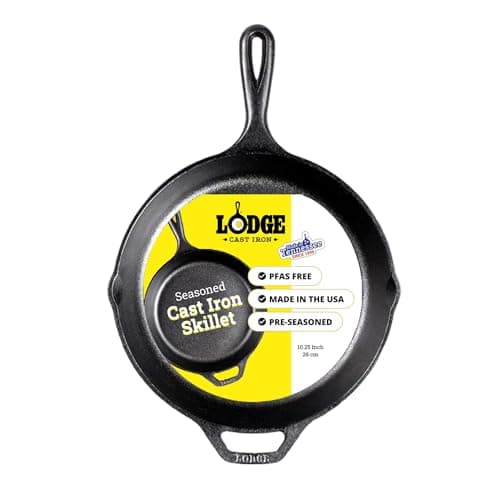
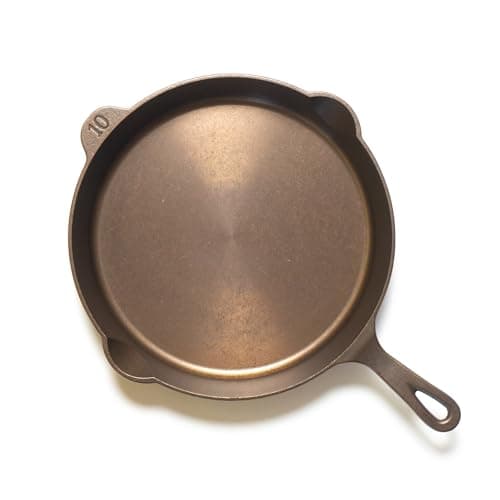
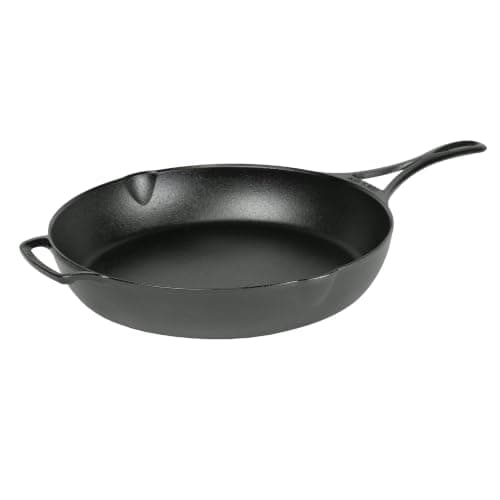
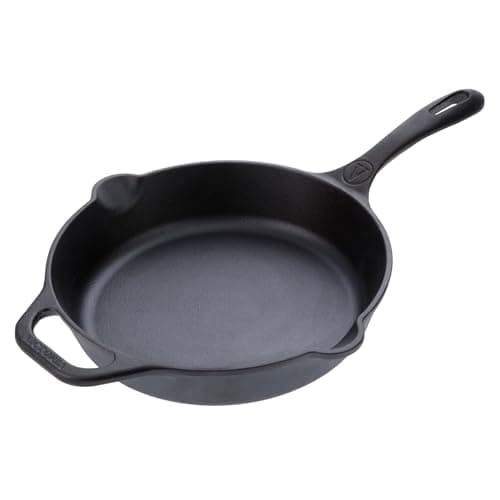
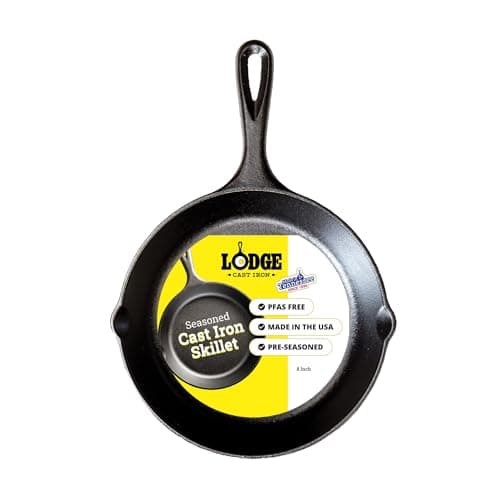
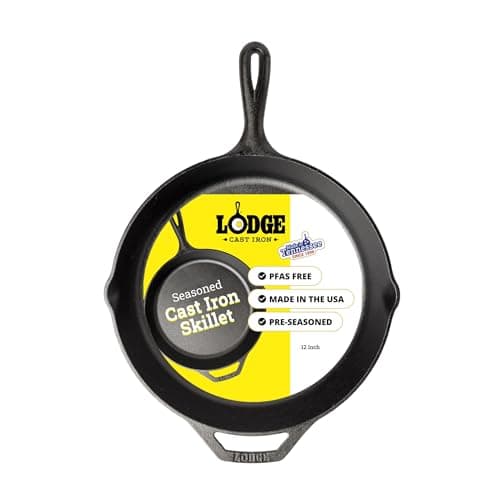
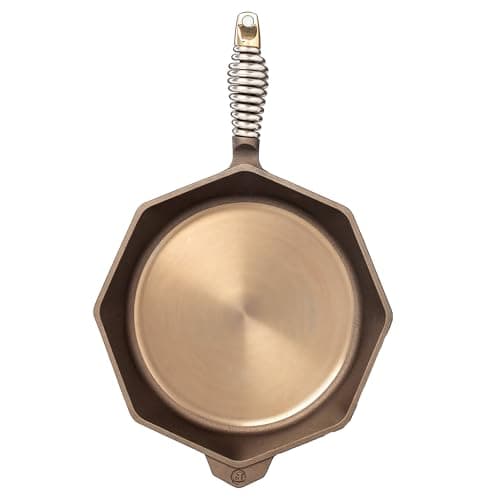
Work from three questions. How much weight can your wrist take? A classic 10.25-inch Lodge is about 5.4 lb; the lightweight pans shave that to under 4 lb, which matters a lot if you flip food or have hand issues. Do you care about a smooth surface? Vintage pans and modern heirloom brands (Field, Stargazer, Lancaster) machine the cooking surface smooth, which is nicer to cook on from day one — but a raw Lodge polishes itself smooth over a year of use for free. What’s your budget? The honest range here runs from $25 to over $200 for pans that cook nearly identically — our skillets-by-budget ladder takes each price band in turn and says what the step up actually buys, including the rungs where the answer is almost nothing. If you have already decided to spend about $25 and just want to know which of the two cheap pre-seasoned pans to pick, Lodge vs Victoria settles that one on published weight, handle length and where each pan is cast.
What size skillet should you buy?
A 10 to 10.25-inch skillet is the right first pan for almost everyone — big enough for two or three portions, small enough to lift and store. Go to 12 inches only if you regularly cook for four or more, and be ready for the extra pound or two of weight. Our skillet sizes guide has the published weight for each size and the usable area you actually get, since the number on the box is the rim rather than the cooking surface. One dish where size is genuinely the whole decision is cornbread, because diameter sets how deep the batter sits — best cast iron skillets for cornbread ranks the pans on Lodge’s own published bake times for each size. If you’ve never owned cast iron, start with our beginner’s pick and setup guide.
Pre-seasoned, smooth, or raw?
Every skillet here ships pre-seasoned, so it cooks the day it arrives. The difference is the starting texture: heirloom pans arrive machined-smooth, Lodge arrives with a slightly pebbled surface that smooths with use. Neither is “non-stick” out of the box — that comes from building up the seasoning, which is the same for a $25 pan and a $200 one. What “pre-seasoned” does and doesn’t mean is worth understanding before you buy — we take it apart in pre-seasoned vs bare cast iron.
And if a skillet isn’t the piece you need
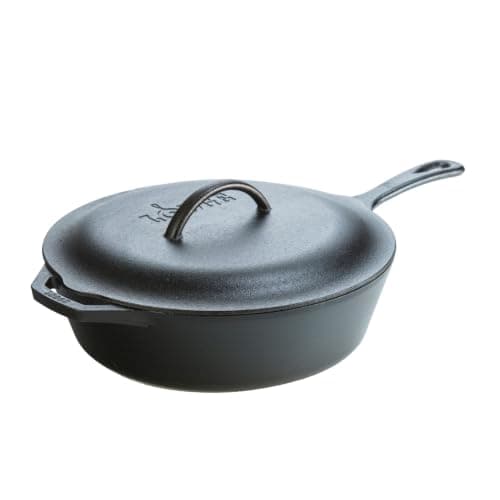
A skillet is the right first buy for nearly everyone, but it isn’t the whole category. If what you actually want is a two-burner surface for family breakfasts, grill marks indoors, or a pan that browns the sides of a loaf, our cast iron cookware roundup covers griddles, grill pans, woks, waffle irons and loaf pans on the same published-spec basis. And if the skillet you want is one you can fry chicken in with a lid on, that is a different casting — the deep skillet and chicken fryer roundup ranks Lodge’s two covered deep skillets, the Combo Cooker and an enameled fryer on their published depth, and takes the USDA’s caution about frying in cast iron seriously.
If it’s the surface or the weight that’s bothering you
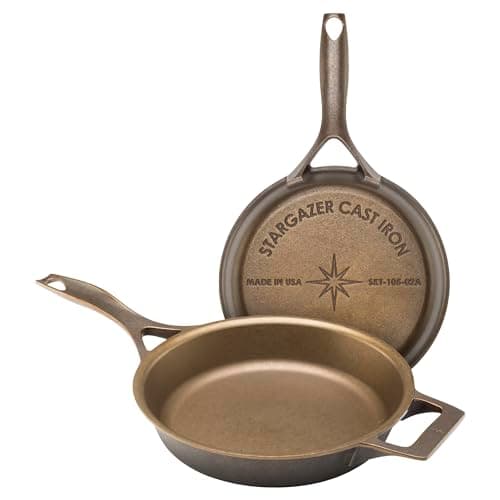
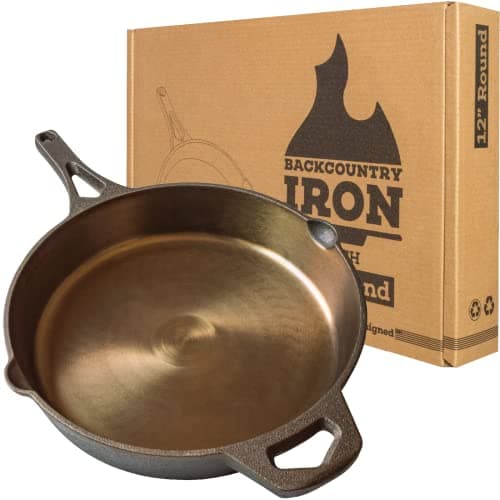
Those are two different complaints with two different answers, and people spend a lot of money on the wrong one. If it is the pebbled surface, that means a machined pan — best smooth cast iron skillets compares the modern makers on published cooking surface and warranty, with full reviews of the Stargazer and the Lancaster No. 10, and head-to-heads in Field vs Stargazer and Stargazer vs Lancaster, which turns on the flat cooking surface each maker publishes. The cheapest milled floor of the lot is reviewed in our Backcountry Iron review — or, if you want both premium pans measured against the $25 Lodge they are asking you to replace, Lodge vs Stargazer vs Field Company. And before anyone reaches for a power tool to make a Lodge smooth, should you sand a cast iron skillet smooth prices that project honestly against simply buying a milled pan. If it is the weight, the cheapest place to start is Lodge’s own lightweight line — see the Blacklock review, which sets out what Lodge publishes for each size and where the thin casting genuinely saves you a pound. Our lightweight cast iron skillet roundup ranks the whole category on published weight and cooking area per pound, and makes the case that buying a smaller pan is the cheaper fix.
Two head-to-heads sit alongside those, for the comparisons buyers actually search for. Lodge Classic vs Chef Collection settles which of Lodge’s own lines to buy — same foundry, same warranty, roughly double the price, and one cooking-surface figure Lodge publishes for one line and withholds for the other. And Lodge vs Griswold takes on the vintage argument properly: the old pan’s three real advantages, and the fact that every one of them is now purchasable new with a warranty attached. The third, newest comparison is the one Lodge owners ask most often: Lodge Blacklock vs Classic, on Lodge’s published figures — three baked layers of seasoning instead of one, a weight reduction of up to 25%, and a handle with a hole in it.
Finally, two jobs that justify their own rankings because the criteria change. Fish needs pan area and a wall a thin spatula can get under, so best cast iron skillets for fish ranks on usable floor rather than rim size and makes room for an enameled pan, because half of all fish recipes end in lemon or wine. And if the pebbled surface of a new pan is what bothers you, should you sand a cast iron skillet smooth explains what the makers who mill their own pans do instead.