Skillet & Stove

Best Cast Iron Skillets for Cornbread

Cornbread is a batter-depth problem, not a heat problem. Lodge publishes a different bake time and a different yield for the same batter in an 8, a 10.25 and a 12-inch pan — which makes the maker's own table the buying guide nobody reads.

By Stephen V.Last updated How we pick

Nearly every cornbread guide online tells you to use cast iron and then stops, as though every iron pan were the same pan. They are not, and the maker that sells more of them than anyone else says so in print. Lodge publishes a pan-by-pan bake table for a single package of its cornbread mix, and the same batter comes out three different breads: 425°F for 20–25 minutes in a 10.25-inch skillet gives “one skillet round,” the 12-inch drops to 15–20 minutes and yields “one thinner round,” and the 8-inchis not a single-pan answer at all — Lodge tells you to divide one package between twoof them and bake 18–20 minutes.

Read that table again and the buying decision falls out of it. Diameter is not really about how much cornbread you get; it is about how deepthe batter sits, and batter depth is what sets the ratio of crisp shell to soft crumb. A wider pan spreads the same batter thinner, so more of it is crust and it bakes faster. A narrower pan piles it deeper, so more of it is crumb and it needs longer. That is the whole argument, and the pans below are ranked on it — followed by the criterion nobody applies to a skillet, which is how pleasant the thing is to haul out of a hot oven twice in ninety seconds.

We own none of these pans and run no test kitchen. Every weight and dimension here is what Lodge, Victoria or Stargazer publishes, read on the date stamped on each card, and our methodology page is explicit about what that does and does not entitle us to claim. The cornbread recipewe write to is a scratch buttermilk batter rather than a mix, but Lodge’s table is still the best published evidence anywhere for how pan size changes the bake.

How this is funded: we earn a commission if you buy through our links, at no extra cost to you. It never changes which pan we recommend, and we’ll happily tell you to keep the skillet you already own. Full disclosure.

Quick picks

Ranked on published specs, build and buyer fit. Select a row to jump to the full write-up. We haven’t cooked in all of these — here is exactly what we do instead.

#ProductBest forPrice
1
Lodge Classic 10.25-inch Skillet

Lodge Classic 10.25-inch Skillet

The pan most people should buy and stop thinking about. Pre-seasoned, made in the USA, oven-safe to anything, and about $25 — the value is so lopsided that the expensive pans have to justify themselves against it, not the other way around.

Best overall
$24.90 · View on Amazon

Price as of October 2, 2026. #ad How we’re funded

2
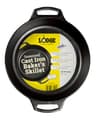
Lodge Baker's Skillet, 10.25-inch (BW10BSK)

Lodge Baker's Skillet, 10.25-inch (BW10BSK)

The classic 10.25-inch round with the long handle deleted and two loop handles cast on instead — and for a bread you bake, pull out hot, grease, fill and put back, that is the better geometry. Lodge's own cornbread table lists it beside the 10.25-inch skillet with the same yield and the same 20-to-25-minute bake, so you are choosing handles, not performance, and it is more than a pound lighter than the skillet it matches.

Best for handling a hot pan
$24.90 · View on Amazon

Price as of October 2, 2026. #ad How we’re funded

3
Victoria 10-inch Cast Iron Skillet

Victoria 10-inch Cast Iron Skillet

The other budget skillet, made in Colombia and factory-seasoned with flaxseed oil for a slightly smoother start than a Lodge. A perfectly good, cheap pan — but not enough of an upgrade to pick over the Lodge unless you find it for less.

Best budget alternative
$28.99 · View on Amazon

$32.9912% off

Price as of October 2, 2026. #ad How we’re funded

4
Lodge Classic 8-inch Skillet

Lodge Classic 8-inch Skillet

The small Lodge — about three pounds, cheap, and the pan you reach for when the 10-incher is more skillet than the job needs. A great second pan for eggs, a single chop or a cornbread for two; a poor only pan, because almost everything you cook for more than one person will crowd it.

Best for a small batch
$14.39 · View on Amazon

$17.9020% off

Price as of October 2, 2026. #ad How we’re funded

5
Lodge Pre-Seasoned 12-inch Skillet with Silicone Handle Holder

Lodge Pre-Seasoned 12-inch Skillet with Silicone Handle Holder

The steak pan, and it is the cheap one. Twelve inches of Lodge is about eight pounds of iron — enough stored heat that two cold steaks do not stall the sear — and this listing is the same L10SK3 pan packed with the silicone holder that makes the handle safe to grab after fifteen minutes over high heat. Nothing here browns better for the money.

Best for a crowd
$34.90 · View on Amazon

Price as of October 2, 2026. #ad How we’re funded

6
Stargazer 10.5-inch Cast Iron Skillet

Stargazer 10.5-inch Cast Iron Skillet

The everyday-size Stargazer, and the one most people who want a machined-smooth pan should look at first. Same polished surface, flared drip-free rim and long stay-cool handle as the 12-inch, in a 5.2 lb body that is barely heavier than a classic Lodge — which is the point.

Best premium
$155.00 · View on Amazon

Price as of October 2, 2026. #ad How we’re funded

The picks in full

#1Best overall

Lodge Classic 10.25-inch Skillet

The pan most people should buy and stop thinking about. Pre-seasoned, made in the USA, oven-safe to anything, and about $25 — the value is so lopsided that the expensive pans have to justify themselves against it, not the other way around.

Strengths

  • Around $25 for a lifetime pan — nothing else here is close on value
  • Made in the USA and sold pre-seasoned, so it cooks the day it arrives
  • Thick walls hold heat well for searing

Trade-offs

  • Slightly pebbled cooking surface (it smooths with years of use)
  • Short handle gets hot and gives little leverage for 5+ lb of iron
  • Heavier than the machined 'heirloom' pans
MaterialBare cast iron
Diameter10.25 in
Weight5.36 lb
Oven-safe toAny oven temp
Induction-readyYes
Made inUSA
WarrantyLifetime (Made Right)

Spec note. Lodge's published weight is 5.36 lb for the 10.25-inch. It ships pre-seasoned from the foundry, so it's usable immediately — you just keep the seasoning up. Bare iron has no upper oven-temperature limit.

Specs read from the manufacturer and product listing, on July 20, 2026. “Not published” means the maker doesn’t state that figure.

#2Best for handling a hot pan

Lodge Baker's Skillet, 10.25-inch (BW10BSK)

The classic 10.25-inch round with the long handle deleted and two loop handles cast on instead — and for a bread you bake, pull out hot, grease, fill and put back, that is the better geometry. Lodge's own cornbread table lists it beside the 10.25-inch skillet with the same yield and the same 20-to-25-minute bake, so you are choosing handles, not performance, and it is more than a pound lighter than the skillet it matches.

Strengths

  • Two loop handles — a square two-handed grip on a 425°F pan, no wrist leverage needed
  • Lodge publishes 4.14 lb against 5.36 lb for the classic 10.25-inch skillet
  • Lodge's own cornbread guide gives it the same yield and bake time as that skillet
  • Made in the USA, pre-seasoned, Made Right lifetime warranty

Trade-offs

  • No long handle, so you cannot tilt, shake or pour it one-handed
  • Loop handles sit close to the pan, which puts your mitts nearer the hot rim
  • Lodge publishes no capacity and no stovetop guidance for this piece
  • Costs about what the far more versatile classic skillet costs
MaterialBare cast iron
Diameter10.25 in
Weight4.14 lb
Oven-safe toAny oven temp
Induction-readyYes
Made inUSA
WarrantyLifetime (Made Right)

Spec note. Item BW10BSK. Read from Lodge's own product page on 2026-10-01: 12.81 in long, 10.31 in wide, 2.0 in high, 4.14 lb, 'Made in the USA', 'Seasoned with 100% natural vegetable oil', 'Nontoxic cookware made without PFAS', 'Dual handles for easy maneuverability', care 'Hand wash, dry, oil', covered by the Lodge Made Right Warranty. The 12.81 in length against the 10.31 in width is the two cast loops, not a handle. Lodge publishes NO capacity figure and NO oven-temperature limit for this piece, and gives no stovetop guidance either way — so capacity reads 'Not published' and the oven row reads 'Any oven temp' like the rest of this site's bare iron. Retailer aggregators circulate 2.85 qt and a 500°F ceiling for it; neither is Lodge's own number, so neither is published here. ASIN B0971M529B resolved from a live Creators API keyword search the same day, title matched on brand and model, In Stock; the silicone-grip version of the same pan (B09RB7NGHN) returned 'Currently unavailable.' on that call.

Specs read from the manufacturer and product listing, on October 1, 2026. “Not published” means the maker doesn’t state that figure.

#3Best budget alternative

Victoria 10-inch Cast Iron Skillet

The other budget skillet, made in Colombia and factory-seasoned with flaxseed oil for a slightly smoother start than a Lodge. A perfectly good, cheap pan — but not enough of an upgrade to pick over the Lodge unless you find it for less.

Strengths

  • Inexpensive, with a longer handle than the classic Lodge
  • Flaxseed-oil factory seasoning starts a touch smoother
  • Lighter (about 4.8 lb) than a classic Lodge

Trade-offs

  • Not meaningfully better than the more-available Lodge
  • Made in Colombia rather than the USA (matters to some buyers)
  • Seasoning still needs the same upkeep as any bare iron
MaterialBare cast iron
Diameter10 in
Weight4.8 lb
Oven-safe toAny oven temp
Induction-readyYes
Made inColombia
WarrantyLifetime

Spec note. Weight about 4.8 lb; made in Colombia; lifetime warranty. Factory-seasoned with flaxseed oil.

Specs read from the manufacturer and product listing, on July 20, 2026. “Not published” means the maker doesn’t state that figure.

#4Best for a small batch

Lodge Classic 8-inch Skillet

The small Lodge — about three pounds, cheap, and the pan you reach for when the 10-incher is more skillet than the job needs. A great second pan for eggs, a single chop or a cornbread for two; a poor only pan, because almost everything you cook for more than one person will crowd it.

Strengths

  • About 3.2 lb — light enough to handle one-handed all day
  • Cheapest way into Lodge cast iron
  • Heats fast and fits a small burner without overhanging

Trade-offs

  • Too small for most main dishes for two or more
  • Short handle is the same awkward Lodge handle, on a smaller pan
  • Easy to outgrow — most people end up buying the 10.25-inch anyway
MaterialBare cast iron
Diameter8 in
Weight3.2 lb
Oven-safe toAny oven temp
Induction-readyYes
Made inUSA
WarrantyLifetime (Made Right)

Spec note. Listed weight 3.2 lb for the 8-inch. Lodge doesn't publish a separate flat cooking-surface figure for this size, so that row reads 'Not published.' Bare iron has no upper oven-temperature limit.

Specs read from the manufacturer and product listing, on August 11, 2026. “Not published” means the maker doesn’t state that figure.

#5Best for a crowd

Lodge Pre-Seasoned 12-inch Skillet with Silicone Handle Holder

The steak pan, and it is the cheap one. Twelve inches of Lodge is about eight pounds of iron — enough stored heat that two cold steaks do not stall the sear — and this listing is the same L10SK3 pan packed with the silicone holder that makes the handle safe to grab after fifteen minutes over high heat. Nothing here browns better for the money.

Strengths

  • About eight pounds of iron holds its heat when cold meat hits it
  • Twelve inches gives roughly 113 sq in of rim area against 82 for a 10.25-inch
  • Ships with the handle holder, which matters on a pan you preheat this hard

Trade-offs

  • Heavy — a two-hand lift once there is food and fat in it
  • Overhangs a domestic burner, so the rim runs cooler than the middle
  • Sand-cast surface is pebbled rather than machined smooth
MaterialBare cast iron
Diameter12 in
Weight7.5 lb
Oven-safe toAny oven temp
Induction-readyYes
Made inUSA
WarrantyLifetime

Spec note. Listing part number L10SK3ASHH41B — Lodge's L10SK3 12-inch skillet plus the ASHH41 silicone handle holder. The listing publishes 7.5 lb item weight, 18 in overall length, 12.56 in width, 2.25 in height and size '12-inch', pre-seasoned with 100% natural vegetable oil, PFAS-free and made in the USA. Lodge publishes 7.89 lb for the bare L10SK3 pan on its own listing; the two figures disagree by under half a pound and we quote both rather than pick one — either way it is about eight pounds. We point at this listing rather than the plain 12-inch (B00006JSUB) because on 2026-08-27 the plain listing returned 'In Stock' but no buyable offer and therefore no price. Bare iron has no upper oven-temperature limit.

Specs read from the manufacturer and product listing, on August 27, 2026. “Not published” means the maker doesn’t state that figure.

#6Best premium

Stargazer 10.5-inch Cast Iron Skillet

The everyday-size Stargazer, and the one most people who want a machined-smooth pan should look at first. Same polished surface, flared drip-free rim and long stay-cool handle as the 12-inch, in a 5.2 lb body that is barely heavier than a classic Lodge — which is the point.

Strengths

  • Machined-smooth cooking surface, slick from the first cook
  • 5.2 lb — lighter than a 12-inch Lodge and easy to handle
  • Made in the USA with a no-expiration lifetime warranty

Trade-offs

  • Costs roughly five times a classic Lodge that cooks the same food
  • Stargazer publishes no cooking-surface figure, only the 10.5 in rim
  • Still bare iron — the seasoning upkeep does not go away
MaterialBare cast iron
Diameter10.5 in
Weight5.2 lb
Oven-safe toAny oven temp
Induction-readyYes
Made inUSA
WarrantyLifetime (no expiration, defects only)

Spec note. Listing size '10.5 inch', published weight 5.2 lb. Stargazer states the pan is individually cast and machined smooth in the USA, has a flared drip-free rim instead of pour spouts, and carries a warranty with no expiration covering manufacturer defects only. No flat cooking-surface measurement is published.

Specs read from the manufacturer and product listing, on August 11, 2026. “Not published” means the maker doesn’t state that figure.

How we ranked these

Four criteria, in the order they matter for a bread you bake rather than a steak you sear. The ordering is deliberately different from our steak-skillet ranking, where stored heat comes first and nothing else comes close. Cornbread does not fight the pan for temperature the way a cold steak does; it sits in a hot oven for twenty minutes and bakes. So mass drops down the list and geometry climbs it.

1. Diameter, because diameter is batter depth

Pour a fixed volume of batter into a wider round and it gets shallower. Working from the published rim diameters, an 8-inch pan is roughly 50 square inches of floor, a 10.25-inch about 82, a 10.5-inch about 87 and a 12-inch about 113 — our own arithmetic from the rim, and an upper bound in every case, because the flat floor is always smaller than the rim on a sloped-sided skillet.

Those are not small differences. Going from a 10.25-inch to a 12-inch pan spreads the same batter over roughly 38 percent more area, and Lodge’s own bake time falls from 20–25 minutes to 15–20 to match. Go the other way to an 8-inch and the batter sits deep enough that Lodge will not recommend a single pan at all — it splits the package across two. If you have ever followed a cornbread recipe exactly and got a pale, wet middle or a dry disc, the most likely culprit is not the recipe. It is that you used a pan a size away from the one the recipe was written for.

Our default is therefore the 10.25-inch, because it is the size written into the recipes. Lodge’s own scratch recipe — Henry Lodge’s Favorite Cornbread — specifies a 10.25-inch skillet explicitly, and Lodge’s mix guide says a 10.25-inch pan “will hold one package of mix and turn out a beautiful round of cornbread.” The full size-by-size reasoning for every other dish lives in our cast iron skillet sizes guide; for cornbread the answer is unusually settled.

2. Getting a 425°F pan out of the oven, twice

This is the criterion a steak-pan ranking ignores and a cornbread ranking cannot. The sequence everyone uses — Lodge’s own instruction is to put the skillet in the heated or pre-heating oven for 10–15 minutes before adding oil and batter— means the pan comes out screaming hot, gets greased, gets filled, and goes straight back in. You are handling several pounds of 425°F iron twice, the second time while it is full of liquid batter.

The University of Illinois Extension’s own cornbread recipe is the only source we found that states the hazard out loud: “if using iron skillet, remove from oven and hold away from face and oven while spraying lightly with nonstick baking spray.” No pan maker prints that, and it is exactly right.

Which makes handle geometry and weight into real specs here. Lodge publishes 5.36 lb for the classic 10.25-inch skillet against 4.14 lbfor its 10.25-inch Baker’s Skillet — the same diameter with the long handle deleted and two cast loop handles in its place — and 3.2 lb for the 8-inch. The 12-inch is around eight pounds: Lodge publishes 7.89 lb for the bare pan and the handle-holder listing publishes 7.5 lb, and we print both rather than choose between two published figures. A single long handle gives you leverage on the stovetop and a cantilever you fight at the oven door; two loops give you a square two-handed grip and nothing to tilt with. For this one job the loops win, which is why they are ranked second rather than mentioned in passing.

3. Release, which is seasoning rather than smoothness

Cornbread batter is wet, sticky and sets hard against iron, so release is a fair worry. It is also mostly solved by the technique rather than the pan: the fat goes into the already hotpan and gets swirled up the sides before any batter touches it. Lodge’s own recipe pours a quarter cup of oil into the skillet and preheats the pan with the oil in it. Done that way, a well-used sand-cast Lodge releases a round of cornbread cleanly.

A machined-smooth floor is a genuine head start, not a different outcome. It is slick from the first bake instead of after a year of cooking, and it wipes out faster afterward. That is worth something, and it is worth noticeably less than the price difference; the evidence is laid out in best smooth cast iron skillets. What actually ruins a cornbread is a pan whose seasoning is thin or patchy, and the fix for that is a seasoning cycle, not a new skillet.

4. What the pan does the rest of the week

A cornbread pan gets used a handful of times a month at most, so the honest fourth criterion is versatility. A classic skillet bakes the cornbread and then fries the eggs, sears the chops and goes under the broiler. A two-loop-handle baker does the bread beautifully and cannot be tilted, shaken or poured from, which rules out most stovetop cooking on geometry alone — and Lodge publishes no stovetop guidance for it either way. Buying it means owning a pan for the bake. That is a perfectly reasonable choice if you bake often and a bad one if this is your first iron pan, and the ranking reflects that: the general-purpose skillet is first, the better-shaped specialist is second.

The preheat is the entire technique

Every source we read on cornbread, maker and extension service alike, converges on the same instruction, which is a decent sign it is true. Lodge says to preheat the pan in the oven “to get a good sizzle when the batter drops,” and to always bake on the center rack. Illinois Extension says “if using iron skillet, place skillet in oven to heat.” Lodge’s mix page puts a duration on it: 10–15 minutes before the oil and batter go in.

The mechanism is the thing cast iron is actually good at. Lodge’s own framing is that heat capacity is a material’s ability to retain energy and cast iron is particularly adept at it — so batter poured into preheated, greased iron sets and browns on contact, rather than slowly warming through while the crust never forms. Pour into a cold skillet and you have baked cornbread in a heavy cake tin. The pan is not doing anything for you until it is hot.

The fat has to survive the pan

One consequence of preheating that most cornbread writing skips: whatever fat you put in that pan has to tolerate the temperature you preheated it to. Most cooking oils begin to smoke somewhere between roughly 350°F and 450°F, and a 425°F pan with a few tablespoons of fat in it sits at the top of that range. Bacon fat, shortening and a refined neutral oil all cope. Butter browns fast and can scorch, which is why the traditional move is butter in the batter and a tougher fat in the pan. Lodge’s own recipe uses a quarter cup of canola at 400°F.

The other caution is about the pan rather than the bread. Do not leave a dry skillet preheating indefinitely on high heat. Seasoning is oil that has polymerized into a hard layer bonded to the iron, and excessive heat depolymerizes it — that is the mechanism behind a pan that looks gray and patchy after a run of hard, hot cooking. A 425°F oven is nowhere near that threshold, which is the quiet advantage of baking cornbread over searing in the same pan: at these temperatures the hot, oiled bake actually maintains the seasoning instead of stripping it. A cornbread skillet genuinely does get better with use.

Where a skillet loses to a molded pan

If what you want is maximum crust, the honest answer is that a skillet is the wrong shape and you should buy a different pan. A skillet gives you one crisp rim and a soft middle. Lodge’s molded bakeware multiplies the edges, and its own yields show how far: the same single package of mix is 16 wedges across two wedge pans, 18 corn sticks across three cornstick pans, or 12 muffins across two muffin pans — all at 425°F for 10–15 minutes rather than 20–25. More surface, less middle, faster bake. Lodge itself calls those pans “popular substitutes for a 10.25” cast iron skillet.”

The trade is portioning and washing-up. A molded pan hands you pre-cut pieces and a lot of corners to grease and clean, and it does nothing else for the rest of the year. We rank those pans on their own terms in best cast iron cornbread pans. If you are deciding between the two categories: buy the skillet if you want one pan, buy the wedge pan if cornbread is a regular event and crust is the point.

What we would not buy for cornbread

  • An enameled cast iron skillet.Enamel is glass fused to iron, and unlike bare iron it carries a published temperature ceiling plus a maker warning about heating the pan empty and dry — which is precisely what a cornbread preheat is. The published limits are collected in how hot enameled cast iron can go. Enamel is the right tool for acid and braising, not for a dry pan preheating at 425°F.
  • A 15-inch skillet. Lodge publishes 12.36 lb for it and 22.2 inches of overall length, which does not fit most sinks and is not something you want to pull out of a hot oven with batter in it. It would also spread a standard batter so thin that you would be making a cornbread cracker. The full case against it is in the large skillet roundup.
  • A deep skillet or chicken fryer. The extra inch of wall is the whole point of that pan and it works against you here: Lodge publishes an 8.75-inch flat floor for the 12-inch deep skillet against 9.12 inches for the classic 12-inch, so you get a smaller baking surface inside the same rim, in a heavier pan. Our deep skillet roundup explains what that pan is genuinely for.
  • The silicone handle holder, in the oven.This one catches people, because the 12-inch Lodge is usually sold with one. Lodge rates the holder to 500°F for hand protection and then states in the same breath that it should not be used over flames, in ovens, or during cooking, grilling or baking — it is for carrying a pan to the table. It comes off before the skillet goes in to preheat. Use a dry mitt or cloth instead, and never a damp one: wet cloth conducts heat to your hand almost instantly.
  • A brand-new bare, unseasoned pan. Cornbread is a poor first cook for raw iron. Every pick here ships pre-seasoned, and pre-seasoned vs bare cast iron explains why almost nobody should buy bare.

What a cornbread skillet costs

This is another category where the buying advice and the cheap answer agree. Our top pick sits in the budget bracket, and so do the small-batch, crowd and purpose-built-baker picks — four of the six pans here are among the least expensive cookware on this site. The premium pick is on the list because a machined floor is a real convenience, not because it bakes a better round of cornbread; it does not. If you have a budget for a cornbread setup, the honest allocation is a cheap 10.25-inch pan and a decent pair of dry mitts.

Live prices for every pick sit in the table at the top of this page and refresh daily. We deliberately do not print a number in prose — a price written into a sentence is wrong the week after it is written, and one of these pans is the kind of listing that intermittently returns no buyable offer at all, which is exactly why the number lives in the live layer rather than in the copy. If you are not in a hurry, our Black Friday cast iron hub records what has historically happened to Lodge skillet pricing in November. The short version: not much.

Getting it right once it arrives

Pan in, oven on, center rack.Lodge’s instruction is 10–15 minutes in the heated or pre-heating oven before the oil and batter go in, and to always bake on the center rack. Mix the batter while it heats.

Fat into the hot pan, then move.Pull the pan, add the fat, swirl it over the floor and up the sides, and pour the batter in immediately. It should sizzle at the edges. That sizzle is the crust forming; if there is no sizzle, the pan was not hot enough. Lodge’s own scratch recipe goes one step further and preheats the pan with the oil already in it.

Match the time to the pan, not to the recipe header. Lodge’s table is the cleanest guide we know of: roughly 20–25 minutes at 425°F for a 10.25-inch, 15–20 for a 12-inch, 18–20 for the two-pan 8-inch split, and 25–30 if you double a batch into a 12-inch. If you changed pan size, change the time.

Rest it five minutes before you turn it out.The crust firms as it cools slightly, and a cornbread tipped straight out of a 425°F pan is the one most likely to tear. Run a knife around the edge first.

Then look after the pan. Let it cool, wipe or rinse it, dry it thoroughly on the burner and rub a very thin film of oil over the warm iron. Our cleaning guide covers the version of this for a pan that actually stuck. The full method for the bread itself, with a buttermilk batter and the optional-sugar argument, is in our cast iron skillet cornbread recipe.

Frequently asked questions

What size cast iron skillet is best for cornbread?

A 10.25-inch, because that is the size the recipes are written for. Lodge's own scratch recipe specifies a 10.25-inch skillet, and its mix guide says a 10.25-inch pan will hold one package and turn out one round, baked at 425F for 20 to 25 minutes. A 10 or 10.5-inch pan is close enough to behave the same way.

Can you bake cornbread in a 12-inch cast iron skillet?

Yes, but shorten the bake. A 12-inch pan is roughly 113 square inches of floor against about 82 for a 10.25-inch, so the same batter sits noticeably shallower. Lodge's own table gives 15 to 20 minutes at 425F for one package in a 12-inch and calls the result one thinner round — more crust, less crumb. If you want a full-depth cornbread in a 12-inch pan, double the batter and bake 25 to 30 minutes instead.

Can you make cornbread in an 8-inch cast iron skillet?

You can, but a standard batter is too much for one. Lodge's guidance for an 8-inch is to divide a single package between two pans and bake 18 to 20 minutes at 425F, yielding two rounds. One 8-inch pan is about 50 square inches of floor against 82 for a 10.25-inch, so a full batter in a single 8-inch skillet bakes deep and risks a wet center. Halve the recipe or use two pans.

How long do you preheat a cast iron skillet for cornbread?

Lodge says 10 to 15 minutes in the heated or pre-heating oven before the oil and batter go in, and to bake on the center rack. The University of Illinois Extension's cornbread recipe gives the same instruction: preheat the oven to 425F and put the skillet in to heat. The pan should be hot enough that the batter sizzles at the edges on contact.

Is a cornbread pan better than a skillet?

It depends entirely on how much crust you want. A skillet gives one crisp rim and a soft middle. Lodge's molded pans multiply the browned faces, and its own yields show the scale of the difference: one package of mix makes 16 wedges across two wedge pans or 18 corn sticks across three cornstick pans, baked in 10 to 15 minutes rather than 20 to 25. The skillet is the more versatile pan; the molded pans are better at this one job.

Can you bake cornbread in an enameled cast iron skillet?

We would not. Enamel carries a published maximum temperature that bare iron does not, and enamel makers warn specifically against heating a pan empty and dry — which is exactly what a cornbread preheat is. Use bare iron for cornbread and keep enamel for braises and acidic cooking.

Do you have to grease a well-seasoned cast iron skillet for cornbread?

Yes. Seasoning is not a non-stick coating, and the fat is doing more than preventing sticking — hot fat swirled up the sides is what fries the crust as the batter sets. Lodge's own recipe pours a quarter cup of oil into the skillet and preheats the pan with the oil in it. Bacon fat, shortening or a refined neutral oil all tolerate a 425F pan; butter browns fast at that temperature and is better in the batter.

Should I leave the silicone handle holder on when I bake cornbread?

No. Lodge rates its silicone hot handle holder to 500F for protecting your hands and states that it should not be used over flames, in an oven, or during cooking, grilling or baking — it is for carrying a hot pan to the table. Take it off before the skillet goes in to preheat and use a dry mitt instead. Never a damp cloth, which conducts heat to your hand almost immediately.

Sources

  • Lodge Cast Iron — How to Bake Lodge Cornbread in Any Cast Iron Pan — Lodge's own pan-by-pan cornbread table for one package of its skillet cornbread mix. 10.25-inch skillet: 'Bake at 425˚ for 20-25 minutes, yields one skillet round'. Baker's Skillet: the same — 'Bake at 425˚ for 20-25 minutes, yields one skillet round'. 8-inch skillet: divide one package between two pans, 'Bake at 425˚ for 18-20 minutes, yields two skillet rounds'. 12-inch skillet: one package gives 'Bake at 425˚ for 15-20 minutes, yields one thinner round', or double the mix for 'Bake at 425˚ for 25-30 minutes, yields one jumbo round'. Wedge pan: 'Bake at 425˚ for 10-15 minutes, yields 16 wedges (or 2 wedge pans)'. Cornstick pan: 'Bake at 425˚ for 10-15 minutes, yields 18 cornsticks (or 3 cornstick pans)'. Muffin pan: 'Bake at 425˚ for 10-15 minutes, yields 12 muffins (or 2 muffin pans)'. Mini cake pan: 'yields 14 cakes (or 2 mini cake pans)'. The sweet mixes bake at 400˚ instead of 425˚. General instruction: 'Be sure to preheat your pan in the oven to get a good sizzle when the batter drops. And always bake on the center rack!' (accessed October 1, 2026)
  • Lodge Cast Iron — Skillet Cornbread Mixes — Lodge's own preheat instruction for cornbread, stated as a duration: 'We suggest putting the skillet in your heated or pre-heating oven for 10-15 minutes before adding oil and batter.' The same page states that 'Wedge pans, cornstick pans, muffin pans and mini-cake pans are all popular substitutes for a 10.25" cast iron skillet' (accessed October 1, 2026)
  • Lodge Cast Iron — Henry Lodge's Favorite Cornbread — The Lodge family's own scratch cornbread recipe, and the pan it names: 'Preheat oven to 400 degrees Fahrenheit', then 'Pour ¼ cup of oil into a 10.25 Inch Cast Iron Skillet and place in oven to preheat', and 'Bake for 35 minutes or until a tester comes out clean'. The fat goes into the pan BEFORE the pan goes into the oven, and the pan specified is the 10.25-inch skillet (accessed October 1, 2026)
  • Lodge Cast Iron — 10.25 Inch Cast Iron Baker's Skillet — Lodge's own spec page for item BW10BSK: 12.81 in long, 10.31 in wide, 2.0 in high, 4.14 lb, 'Made in the USA', 'Seasoned with 100% natural vegetable oil', 'Dual handles for easy maneuverability', 'Nontoxic cookware made without PFAS', care 'Hand wash, dry, oil', Lodge Made Right Warranty. Lodge's description is explicitly about baking — 'Cast iron is a baker's best friend. That's because cast iron bakeware won't dent, bend, or warp at high temperatures' and 'great heat retention helps you get perfect bakes every single time'. Lodge publishes no capacity figure, no oven-temperature ceiling and no stovetop guidance for this piece (accessed October 1, 2026)
  • University of Illinois Extension — Recipe Rescue: Cornbread (Leia Kedem, MS, RD) — An independent extension-service cornbread recipe that uses the same technique as Lodge's: 'Preheat oven to 425º', 'If using iron skillet, place skillet in oven to heat', and bake 'skillet bread for 25 minutes'. It also prints the handling warning no pan maker states: 'If using iron skillet, remove from oven and hold away from face and oven while spraying lightly with nonstick baking spray' (accessed October 1, 2026)
  • Lodge Cast Iron — Why Bake in Cast Iron? — Lodge on baking: heat capacity is a material's ability to retain energy and cast iron is particularly adept at it, which is what gives steady browning and crust; once preheated the pan delivers quick, steady heat; re-season by drying the piece, coating it lightly with oil and baking it at 450-500°F for an hour (accessed August 18, 2026)
  • University of Illinois Extension — Are you using the right oil for the right job? — Smoke point is the temperature at which a fat begins to smoke; most cooking oils smoke between about 350°F and 450°F, and high-heat work wants oils rated 400°F or above (accessed August 11, 2026)
  • America's Test Kitchen — The Science of Seasoning — How seasoning forms — oil polymerizing into a hard, plastic-like layer — and how too much heat depolymerizes it (accessed July 20, 2026)
  • Lodge Cast Iron — Silicone Hot Handle Holder — Lodge's own page for the ASHH41 handle holder: protection 'up to 500℉', a fit for classic Lodge skillets 9 inches and larger, manufacture in China or Vietnam, and the instruction that it must NOT be used directly over flames, in ovens, or during cooking, grilling or baking — it is for transporting and serving only (accessed September 4, 2026)

Keep reading