Skillet & Stove

Cast Iron Seasoning Products Compared

Grapeseed, flaxseed and the branded tins, ranked on what the makers actually publish is inside them. Six products, their real ingredient lists, and the honest question of whether any of them beats a $7 bottle of cooking oil.

By Stephen V.Last updated How we pick

There is a whole shelf of products sold for seasoning cast iron, and almost none of them tells you the one thing that decides between them: what is in the bottle. So that is what this page ranks on. Every ingredient list below is the maker’s or the listing’s own published wording, read on the date stamped on each card — and where a product doesn’t publish its ingredients, we say so instead of guessing.

The finding that shapes the whole page: the two premium pan makers who tell you exactly how to season their skillets both name grapeseed oil. Smithey pre-seasons at the factory with pure grapeseed at 475°F; Stargazer’s own care guide specifies a high-smoke-point oil such as grapeseed or sunflower. A 16.9 fl oz bottle of the stuff costs less per ounce than anything else here by a wide margin. Every branded product on this page has to justify itself against that.

Some of them do — a spray lays down a thinner film than a hand can, a wax stays put on a vertical wall, a coconut-oil base is sold specifically on not going rancid. Those are real problems with real fixes. But the ranking below starts from the plain oil, because that is where the honest answer starts. If you want the method rather than the products, our seasoning guide is the page you actually want, and our guide to seasoning oils explains the chemistry these products are all working with.

How this is funded: we earn a commission if you buy through our links, at no extra cost to you. It never changes which pan we recommend, and we’ll happily tell you to keep the skillet you already own. Full disclosure.

Quick picks

Ranked on published specs, build and buyer fit. Select a row to jump to the full write-up. We haven’t cooked in all of these — here is exactly what we do instead.

#ProductBest forPrice
1
La Tourangelle Expeller-Pressed Grapeseed Oil (16.9 fl oz)

La Tourangelle Expeller-Pressed Grapeseed Oil (16.9 fl oz)

Plain grapeseed oil in a tin, and the honest answer for most people. This is the oil Stargazer names in its own care guide and the one Smithey pre-seasons its pans with at the factory — so buying a bottle of it is buying exactly what the premium makers use, with no branding markup and nothing else in it. On published price per ounce it is far and away the cheapest thing here.

Best overall — and the cheapest
$7.58 · View on Amazon

Price as of September 6, 2026. #ad How we’re funded

2
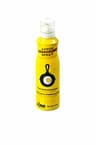
Lodge Cast Iron Seasoning Spray (8 oz)

Lodge Cast Iron Seasoning Spray (8 oz)

Canola oil in a pump bottle from the company that made most of the cast iron in America, and the most useful branded product here for one specific reason: a spray lays down a thinner film than a hand and a paper towel do. Too much oil is the single most common seasoning mistake, and this is the only thing on the page that makes that mistake harder to make.

Best for a sticky pan
$9.93 · View on Amazon

Price as of September 6, 2026. #ad How we’re funded

3
Crisbee Cream Iron Cast Iron Seasoning (6 oz)

Crisbee Cream Iron Cast Iron Seasoning (6 oz)

An oil-and-beeswax cream rather than a liquid, and the wax is the reason to consider it. Beeswax is solid at room temperature, so the film stays where you put it on a vertical wall or an upturned pan instead of running down to pool in a corner — which is the practical failure mode of wiping a thin oil over a whole skillet. Crisbee also publishes what is in it, which several of its competitors do not.

Best oil-and-wax blend
$14.95 · View on Amazon

Price as of September 6, 2026. #ad How we’re funded

4
Lancaster Cast Iron Seasoning (2 oz)

Lancaster Cast Iron Seasoning (2 oz)

The only product here made by a foundry that also casts a skillet we review, and the only branded blend whose published ingredients include the grapeseed oil the premium makers actually specify. Lancaster states locally sourced beeswax, grapeseed oil and safflower oil, made in the USA. It is also, per ounce, the dearest thing on this page by a distance — a 2 oz puck at roughly seven dollars an ounce.

Best from a foundry
$14.00 · View on Amazon

Price as of September 6, 2026. #ad How we’re funded

5
Caron & Doucet Cast Iron Seasoning & Cleaning Oil (8 oz)

Caron & Doucet Cast Iron Seasoning & Cleaning Oil (8 oz)

A refined-coconut-oil base with essential oils added, sold on one claim none of the others make: that it will not go rancid. That is the strongest real argument for a branded seasoning product over a bottle of cooking oil, because rancid fat on a stored pan is a genuine problem and it is the one thing a cupboard-oil routine reliably gets wrong. Whether it is worth roughly twice the price of the oil the makers specify depends entirely on how long your pans sit.

Best for pans in storage
$14.99 · View on Amazon

Price as of September 6, 2026. #ad How we’re funded

6
La Tourangelle Organic Virgin Flaxseed Oil (8.45 fl oz)

La Tourangelle Organic Virgin Flaxseed Oil (8.45 fl oz)

Included because it is the most-recommended seasoning oil on the internet, and ranked last because we would not start a pan with it. Flaxseed is a drying oil — the same chemistry as the linseed oil in paint — so it polymerizes into the hardest, glossiest layer of anything here, and then has a well-documented habit of flaking off in sheets months later. Buy it knowingly, apply it absurdly thin, or buy the grapeseed.

The flaxseed option, with a caveat
$11.99 · View on Amazon

Price as of September 6, 2026. #ad How we’re funded

The picks in full

#1Best overall — and the cheapest

La Tourangelle Expeller-Pressed Grapeseed Oil (16.9 fl oz)

Plain grapeseed oil in a tin, and the honest answer for most people. This is the oil Stargazer names in its own care guide and the one Smithey pre-seasons its pans with at the factory — so buying a bottle of it is buying exactly what the premium makers use, with no branding markup and nothing else in it. On published price per ounce it is far and away the cheapest thing here.

Strengths

  • The oil Stargazer's and Smithey's own published methods name
  • Cheapest per fluid ounce of anything here by a wide margin
  • One ingredient — nothing to react to and nothing to explain

Trade-offs

  • You are wiping oil on by hand; there is no applicator
  • 16.9 fl oz is far more than a seasoning routine will ever use
  • No smoke point published on the listing
FormSeasoning oil
Size16.9 fl oz
What's in itGrapeseed oil, expeller-pressed — one ingredient
Made inNot published

Spec note. Listing publishes a 16.9 fl oz size, model 40-05-GSO-A512-CS, and describes the oil as expeller-pressed and sustainably produced. It is sold as a COOKING oil, not a cast iron product — which is the point of including it, since the makers who charge the most for their pans specify this same oil for seasoning them. No smoke point and no country of manufacture is published on the listing, so both read 'Not published'.

Specs read from the manufacturer and product listing, on September 3, 2026. “Not published” means the maker doesn’t state that figure.

#2Best for a sticky pan

Lodge Cast Iron Seasoning Spray (8 oz)

Canola oil in a pump bottle from the company that made most of the cast iron in America, and the most useful branded product here for one specific reason: a spray lays down a thinner film than a hand and a paper towel do. Too much oil is the single most common seasoning mistake, and this is the only thing on the page that makes that mistake harder to make.

Strengths

  • Lodge states 100% canola oil with no additives and no propellants
  • A pump spray lays down a thinner film than wiping it on by hand
  • Made in the USA by the maker of the pan most readers already own

Trade-offs

  • Canola oil in a bottle costs a fraction of this per fluid ounce
  • 8 fl oz at spray-bottle pricing is not a value buy
  • Still needs wiping back after spraying — the spray is not the whole job
FormSeasoning oil
Size8 fl oz
What's in it100% canola oil, no additives or propellants
Made inUSA

Spec note. Listing publishes part number A-SPRAY, an 8 fl oz size and 100% canola oil with 'no additives or propellants'. Lodge's own listed method is the same three steps as its care guide: hand wash with a little soap, dry promptly and thoroughly, then rub a light layer on and wipe the surface until no oil residue remains — worth quoting because that last clause is the step people skip. Lodge states its products are made in the USA and are PFOA- and PTFE-free.

Specs read from the manufacturer and product listing, on September 3, 2026. “Not published” means the maker doesn’t state that figure.

#3Best oil-and-wax blend

Crisbee Cream Iron Cast Iron Seasoning (6 oz)

An oil-and-beeswax cream rather than a liquid, and the wax is the reason to consider it. Beeswax is solid at room temperature, so the film stays where you put it on a vertical wall or an upturned pan instead of running down to pool in a corner — which is the practical failure mode of wiping a thin oil over a whole skillet. Crisbee also publishes what is in it, which several of its competitors do not.

Strengths

  • Published ingredients: non-GMO sunflower oil and beeswax
  • Solid at room temperature, so it doesn't run or pool on the sides
  • Family-made in the USA, in a 6 fl oz tub that lasts

Trade-offs

  • Several times the price per fluid ounce of a bottle of plain oil
  • Wax makes a pan look finished before the seasoning is actually hard
  • Sunflower rather than the grapeseed the premium makers specify
FormSeasoning wax
Size6 fl oz
What's in itNon-GMO sunflower oil and beeswax
Made inUSA

Spec note. Listing publishes a 6 fl oz size and states the ingredients as 'Non-GMO Sunflower Oil and beeswax', family owned and made in the USA. Crisbee's other format, the 2.3 oz Crisbee Stik, publishes a DIFFERENT blend on its own listing — grapeseed oil and beeswax — so the two are not interchangeable if the oil is what you are choosing on. Neither listing publishes a smoke point.

Specs read from the manufacturer and product listing, on September 3, 2026. “Not published” means the maker doesn’t state that figure.

#4Best from a foundry

Lancaster Cast Iron Seasoning (2 oz)

The only product here made by a foundry that also casts a skillet we review, and the only branded blend whose published ingredients include the grapeseed oil the premium makers actually specify. Lancaster states locally sourced beeswax, grapeseed oil and safflower oil, made in the USA. It is also, per ounce, the dearest thing on this page by a distance — a 2 oz puck at roughly seven dollars an ounce.

Strengths

  • Published blend: locally sourced beeswax, grapeseed oil and safflower oil
  • Made in the USA by an actual cast iron foundry, not a care-products brand
  • Stated for both initial seasoning and after-each-use maintenance

Trade-offs

  • The dearest thing here per ounce — a 2 oz puck at premium pricing
  • 2 oz is a small tin next to a 16.9 fl oz bottle of the same base oil
  • Nothing in it that a bottle of grapeseed and a block of beeswax lack
FormSeasoning wax
Size2 oz
What's in itBeeswax, grapeseed oil and safflower oil
Made inUSA

Spec note. Listing publishes a 2 oz size and states the product is 'Made from locally sourced beeswax grapeseed oil, and safflower oil' and 'Made in the USA', for use on cast iron skillets, dutch ovens and carbon steel either after each use or for a full oven re-seasoning. No smoke point is published. Lancaster's separate care guide for its pans — cited on this site's Lancaster review — is where its actual method lives; the listing gives ingredients, not a method.

Specs read from the manufacturer and product listing, on September 3, 2026. “Not published” means the maker doesn’t state that figure.

#5Best for pans in storage

Caron & Doucet Cast Iron Seasoning & Cleaning Oil (8 oz)

A refined-coconut-oil base with essential oils added, sold on one claim none of the others make: that it will not go rancid. That is the strongest real argument for a branded seasoning product over a bottle of cooking oil, because rancid fat on a stored pan is a genuine problem and it is the one thing a cupboard-oil routine reliably gets wrong. Whether it is worth roughly twice the price of the oil the makers specify depends entirely on how long your pans sit.

Strengths

  • States a food-grade, solvent-less refined coconut oil base
  • Explicitly sold on not going rancid, unlike canola, hemp or flax
  • Essential-oil blend targets odour, which stored iron does pick up

Trade-offs

  • Roughly twice the price per fluid ounce of plain grapeseed
  • No country of manufacture published on the listing
  • The rancidity problem it solves is mostly a storage-habit problem
FormSeasoning oil
Size8 fl oz
What's in itRefined coconut oil base plus essential oils
Made inNot published

Spec note. Listing publishes an 8 fl oz size, model 640321, and describes a food-grade, solvent-less refined coconut oil base 'that has had it's long-chain fatty acids removed', blended with pure essential oils, and states the product 'will never go rancid' unlike canola, hemp or flaxseed oil. Manufacturer of record is Caron Brands Inc.; no country of manufacture is published, so that row reads 'Not published'. No smoke point is published either — which matters here, because a seasoning layer only forms above one.

Specs read from the manufacturer and product listing, on September 3, 2026. “Not published” means the maker doesn’t state that figure.

#6The flaxseed option, with a caveat

La Tourangelle Organic Virgin Flaxseed Oil (8.45 fl oz)

Included because it is the most-recommended seasoning oil on the internet, and ranked last because we would not start a pan with it. Flaxseed is a drying oil — the same chemistry as the linseed oil in paint — so it polymerizes into the hardest, glossiest layer of anything here, and then has a well-documented habit of flaking off in sheets months later. Buy it knowingly, apply it absurdly thin, or buy the grapeseed.

Strengths

  • Builds the hardest, glossiest layer of any oil on this page
  • Published as organic virgin flaxseed oil — one ingredient
  • Cheaper per bottle than most of the branded cast iron products

Trade-offs

  • Well known for flaking off in sheets once a corner lifts
  • Unforgiving — a coat a fraction too thick will craze
  • Roughly three times the price per fluid ounce of the grapeseed
FormSeasoning oil
Size8.45 fl oz
What's in itOrganic virgin flaxseed oil — one ingredient
Made inNot published

Spec note. Listing publishes an 8.45 fl oz size, model LAT69525, and organic virgin flaxseed oil sold as a food product for smoothies, oatmeal and dressings — not as a cast iron product, which is why nothing on the listing addresses seasoning at all. The flaking behavior in our verdict is NOT a manufacturer claim and appears nowhere on this listing; it is the drying-oil behavior set out in our seasoning-oil guide. The listing's item weight (0.005 lb) is not credible for an 8.45 fl oz bottle, so no weight is recorded.

Specs read from the manufacturer and product listing, on September 3, 2026. “Not published” means the maker doesn’t state that figure.

Grapeseed vs flaxseed vs branded, in one table

Read this on the ingredients column. Once you strip the branding away, almost everything here is a vegetable oil, sometimes with beeswax in it, and the price per ounce varies by more than a factor of fifteen.

ProductPublished ingredientsFormSize
La Tourangelle grapeseedGrapeseed oil, expeller-pressedBottle16.9 fl oz
Lodge Seasoning Spray100% canola oil, no additives or propellantsPump spray8 fl oz
Crisbee Cream IronNon-GMO sunflower oil, beeswaxCream / wax6 fl oz
Lancaster Cast Iron SeasoningBeeswax, grapeseed oil, safflower oilPuck / wax2 oz
Caron & DoucetRefined coconut oil base, essential oilsBottle8 fl oz
La Tourangelle flaxseedOrganic virgin flaxseed oilBottle8.45 fl oz

No product on this page publishes a smoke point for itself, so there is no smoke-point column — we would have to invent it, and the whole point of this site is that we don’t. What the published sources do give us is a band: the University of Illinois Extension puts most cooking oils between roughly 350°F and 450°F, with lighter refined oils sitting higher. Seasoning is normally done at 450–500°F, which is why nearly every neutral oil in an ordinary kitchen works.

Why grapeseed keeps winning

Seasoning is not oil sitting on iron — it is oil that has been chemically changed. Take a fat past its smoke point and it breaks down, its molecules cross-link with each other and bond to the metal, and you get a hard, plastic-like layer. That is polymerization, and it is what the American Chemical Society and America’s Test Kitchen are both describing when they explain a seasoned pan.

The consequence flips most people’s intuition: you want an oil your oven temperature will pass, not one it stays below. Grapeseed sits in the right part of the band, it is very neutral, and it is thin enough to spread in a genuinely fine film — which is the property that actually matters, because too much oil is the number one cause of a tacky pan.

Then there is the argument from authority, and in this case it is a good one. Smithey publishes grapeseed at 475°F as its own method and pre-seasons its $180–$220 skillets with two to three coats of it. Stargazer names grapeseed or sunflower in its care guide. Lancaster puts grapeseed into its branded tin. When the makers charging the most for their pans all specify the same cheap oil, buying a bottle of that oil is not a compromise — it is buying exactly what they use.

The flaxseed question, settled

Flaxseed is simultaneously the most recommended and the most complained-about seasoning oil on the internet, and both reputations are earned.

It works spectacularly at first. Flaxseed is a drying oil — the same chemistry as the linseed oil in paint — so it polymerizes far more aggressively than a cooking oil does. Six thin coats produce a hard, glossy, almost enamel-looking black surface that people photograph and post.

The problem arrives months later: it flakes. The same aggressive cross-linking builds a brittle layer with relatively poor adhesion, and once a corner lifts, sheets of it come away. It is also unforgiving of the slightest excess — a coat a fraction too thick will craze. Some people run flaxseed pans for years without trouble; plenty of others have had to strip and start again.

Our position is unchanged from our oils guide: it is not worth the risk for a first seasoning. We rank the flaxseed last here not because it is a bad product — it is a clean, single- ingredient organic oil — but because the thing it is famous for is the thing it is most likely to do to your pan. Note also that this is a food product: nothing on the bottle addresses cast iron at all, and the flaking is not a manufacturer claim.

When a branded product is genuinely worth it

Three of the four branded products here solve a specific problem that a bottle of oil doesn’t, and it is worth being precise about which.

If your seasoning keeps coming out sticky: buy the spray

Excess oil pools, and pooled oil bakes into a gummy varnish instead of a hard layer. It is the single most common seasoning failure, and it is a quantity problem, not an oil problem. A pump spray lays down a thinner, more even film than a hand and a paper towel do, which is a real mechanical advantage. Lodge’s spray is 100% canola with no additives and no propellants, from the company that made the pan most readers already own. You are paying spray-bottle prices for canola oil, and for this specific problem that is a fair trade. It does not remove the wipe-back step — Lodge’s own instructions still say to wipe until no oil residue remains.

If the oil runs off the sides: buy a wax blend

Wiping a thin liquid oil over a whole skillet — walls, rim, handle, base — and having it stay put is harder than it sounds. Beeswax is solid at room temperature, so a cream or puck stays where you put it. Crisbee’s Cream Iron publishes non-GMO sunflower oil and beeswax in a 6 fl oz tub; Lancaster’s 2 oz puck publishes beeswax, grapeseed oil and safflower oil, made in the USA by an actual foundry.

One caution that applies to both: wax makes a pan look finished before the seasoning is hard. A waxed pan comes out of the cupboard glossy whether or not anything has polymerized. That is cosmetic, and it is worth knowing so you judge the surface by how it cooks rather than how it shines.

If your pans sit for months: consider the coconut base

Rancidity is the one genuine failure a cupboard-oil routine reliably produces. Leave too much of an ordinary vegetable oil on a pan that then sits unused through a summer and it can go off — and you will smell it before you cook with it. Caron & Doucet sells directly against that: a food-grade, solvent-less refined coconut oil base with the long-chain fatty acids removed, blended with essential oils, and stated on the listing as never going rancid unlike canola, hemp or flaxseed.

Whether that is worth roughly twice grapeseed money depends on your storage habits more than your pans. If you cook on your iron weekly, the oil never sits long enough to matter and this is solving a problem you don’t have. If your dutch oven comes out twice a year, it might be the most useful product on the page — and our storage guide covers the habits that matter even more than the oil does.

What none of these products can do

No product here is a coating you apply. Every one of them is a fat that has to be taken past its smoke point in a hot oven or on a hot burner before anything durable exists. Buy the fanciest tin on this page, wipe it on a cold pan and put it in the cupboard, and you have oiled a pan — you have not seasoned it.

The mistakes that actually ruin a seasoning layer are all about method, and none of them is about which product you chose: too much oil (rub it on, then wipe it back until the pan looks dry — it will feel like you removed all of it, and you didn’t), not hot enough (below the smoke point nothing polymerizes, and oven thermostats are routinely off by 30–50°F), too few coats too thick, and skipping the sides, back and handle, where bare iron is a rust site. That is the whole job, and it is set out step by step in our how to season a cast iron skillet guide.

The other thing worth keeping in proportion: oven seasoning gives you a foundation of three to six thin layers, and everything after that comes from cooking. A pan used weekly for a year has hundreds of micro-layers built from whatever fat happened to be in it, plus mechanical polishing from every pass of a spatula. That accumulated surface dwarfs the contribution of the specific product you chose for round three eighteen months ago. Which is why the cheapest honest answer on this page is also the one we recommend.

Which pan you own barely changes the answer

One thing worth saying plainly for anyone who arrived here after buying an expensive skillet: the upkeep is identical across the price scale. A $25 Lodge and a $155 Stargazer want the same oil, the same thin film and the same heat — we put that case in Lodge vs Stargazer vs Field and it is one of the reasons the budget ladder in best cast iron skillets by budget flattens out so fast. A machined surface starts slicker; it does not need a different product.

The one real exception is enameled cast iron, which needs none of this. Enamel is glass. There is nothing to season and nothing on this page will help it — if food is sticking to an enameled pot, the fix is technique, not a tin.

Frequently asked questions

What is the best product for seasoning cast iron?

A plain bottle of grapeseed oil, for most people. It is what Smithey pre-seasons its pans with at the factory and what Stargazer names in its own care guide, it is very neutral, it spreads in a genuinely thin film, and it costs a fraction per ounce of any branded tin. Branded products earn their place only when they solve a specific problem — a spray for over-oiling, a wax for coverage, a coconut base for pans in long storage.

Is grapeseed or flaxseed better for seasoning cast iron?

Grapeseed, for almost everyone. Flaxseed builds the hardest and glossiest layer of any oil, but it is a drying oil — the same chemistry as linseed oil in paint — and it is well documented for flaking off in sheets months later once a corner lifts. Grapeseed builds a slightly softer layer that stays put. If you want the flaxseed finish, apply it absurdly thin and accept that a strip-and-restore may be in your future.

Are branded cast iron seasoning products worth it?

Sometimes, for one specific reason each. Lodge's spray puts down a thinner film than a hand can, which fixes the sticky-pan problem. Crisbee's and Lancaster's beeswax blends stay put on vertical walls instead of running down to pool. Caron & Doucet's refined coconut base is sold on never going rancid, which matters for pans stored for months. If none of those is your problem, you are paying a large markup on vegetable oil.

What is in Crisbee and Lancaster cast iron seasoning?

Crisbee's Cream Iron publishes non-GMO sunflower oil and beeswax; its 2.3 oz Stik publishes a different blend, grapeseed oil and beeswax, so the two are not interchangeable. Lancaster publishes locally sourced beeswax, grapeseed oil and safflower oil, made in the USA. Both are oil-plus-wax products, which is why they behave differently on a pan's sides than a liquid oil does.

Can I just use vegetable oil from the cupboard?

Yes, and it will work. Canola, ordinary vegetable oil, refined sunflower, safflower and peanut oil all sit in the right band and all polymerize properly at normal seasoning temperatures. The oil matters far less than applying it thinly enough and getting the pan hot enough. Avoid extra virgin olive oil, butter, and animal fats for deliberate oven rounds.

Do these products work on enameled cast iron?

No, and enameled cast iron does not need them. Enamel is a fused glass layer with nothing for oil to bond to, so there is no seasoning to build or maintain — that is the whole reason people buy it. If food is sticking to an enameled pot, the cause is heat and technique rather than a missing seasoning layer.

Sources

Keep reading